
Abura method: principles, typical menus & dietary supplements
Highlighted by the recent weight loss of certain celebrities, the Abura method is becoming increasingly popular! Find out more about this slimming diet, typical menus and the supplements to use with it...


What is the Abura method?
The Abura method is a combination of two well-known diets:
- Intermittent fasting: the most common pattern (16/8) involves fasting for 16 hours a day and concentrating your meals in an 8-hour window.
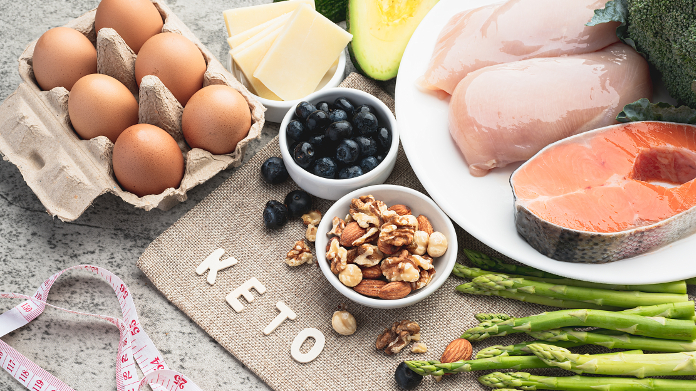
- The ketogenic diet (or keto diet): this is based on a diet very low in carbohydrates, high in quality fats (vegetable oils, nuts, oily fish, etc.) and moderate in proteins (meat, poultry, eggs, dairy products, etc.). The aim is to encourage the body to use the fats already present in the body as its main source of energy.
The aim of the Abura diet is to improve insulin control, promote fat oxidation, stabilise energy and preserve muscle mass. All this is achieved by generating a negative daily energy balance, a well-known mechanism for weight loss.
How does the Abura method work and what are its potential benefits?
By relying on different biological mechanisms, the Abura method could offer interesting results in terms of weight management.
Better management of blood sugar levels and cravings
Reducing foods with a high glycaemic index limits peaks and troughs in glycemia (the level of glucose in the blood).
These fluctuations in blood sugar levels are often linked to chronic fatigue, difficulty concentrating and food cravings.
By focusing on a low-carbohydrate diet, the Abura diet could help reduce cravings and snacking.
But for some people, a low-carb diet can be difficult to maintain over the long term (1).
Supporting fat loss
The body has a natural tendency to use carbohydrates as its main source of energy.
If it can't use enough carbohydrates, it enters a state known as ketosis, where lipids are mobilised first: the body uses its fat reserves to produce ketone bodies, a source of energy that replaces glucose.
This energy switch encourages fat oxidation and helps to reduce body fat.
And intermittent fasting can reinforce this effect: the body is forced to draw on adipose tissue while waiting for the next food intake.
Improved energy and mental clarity
Ketosis allows the body to benefit from more stable and continuous energy than that provided by glucose.
As well as reducing inflammation and oxidative stress, this could improve brain metabolism and brain function over the long term (mental clarity, concentration, calmness, sleep, etc.) (2).
However, for the body to make optimal use of ketone bodies as an energy source instead of glucose, an adaptation period of several weeks is required (3).
By combining carbohydrate restriction and intermittent fasting, the Abura method encourages the use of fat as a source of energy, while relying on a key mechanism for weight loss: the calorie deficit.
A typical day with the Abura method
Generally, the first food intake takes place at midday, after 16 hours of fasting, including the night (but this varies according to the intermittent fasting scheme applied).
Here's an example of how food might be spread out over the day:
- breakfast: Bündnerfleisch (air-dried beef) omelette, handful of almonds
- lunch: courgette tagliatelle, chicken escalope with whole cream, avocado in olive oil, small portion of mature cheese
- snack: plain yogurt and berries (raspberries, blueberries, etc.), green tea or sugar-free herbal tea
- dinner: grilled salmon or mackerel, cauliflower purée with coconut oil
There is a wide variety of Abura recipes and menus, the main thing being to respect which foods are authorized and which should be avoided.
Foods to eat as a priority:
- fish rich in omega-3 (salmon, tuna, mackerel, herring, sardines, etc.)
- quality meats
- eggs
- green vegetables with a low glycaemic index (broccoli, courgettes, cauliflower, spinach)
- first cold-pressed vegetable oils
- unsalted oilseeds
Foods to exclude or severely limit:
- all foods containing sugar (pastries, soft drinks, fruit juices, etc.)
- starchy foods (cereals, rice, pasta, potatoes, bread, etc.)
- very sweet fruit (pineapple, banana, mango, cherry, etc.)
- processed foods
What food supplements should be taken with an Abura diet?
The ideal partner for keto diets, coconut oil, or rather its precious fatty acid (caprylic acid), is an essential part of a slimming diet.
It contains medium-chain triglycerides (MCTs), which are highly digestible and can be used directly as a source of energy, rather than being stored in fatty tissue (4).
 Discover Organic MCT Oil Pure C8, an organic MCT oil, pure and highly concentrated in C8 caprylic acid, to be eaten pure, in vinaigrettes, soups, yogurts, etc.
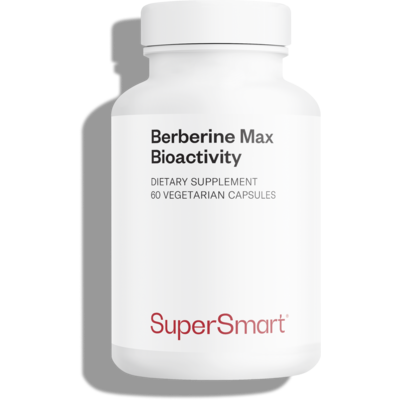
Derived from the root of the Berberis aristata plant, berberine is a natural alkaloid which may help to regulate blood sugar levels by promoting glucose breakdown, insulin sensitivity and reducing glucose production by the liver (5).
Discover Berberine Max Bioactivity, a patented supplement with exceptional bioavailability (up to 10 times more than standard berberine), for an even more significant impact on blood sugar levels.
Certain active compounds can also support weight loss by helping to preserve muscle mass and energy.
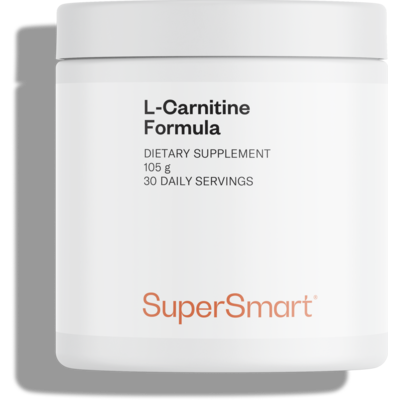
This is the case with L-carnitine, a natural substance synthesised from amino acids: it is thought to facilitate the transport of fatty acids to the mitochondria for energy production, and may support weight and fat mass reduction (6).
Discover L-Carnitine Formula, a supplement based on acetyl-L-carnitine and L-carnitine tartrate, to support fat metabolism and energy production.
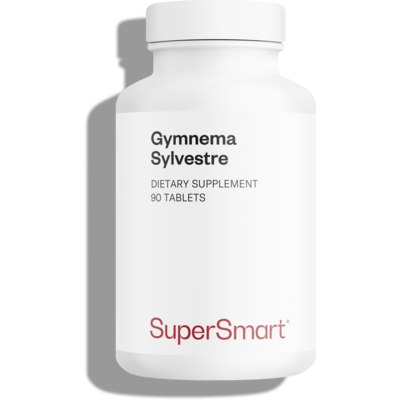
Gymnema sylvestre, a famous Ayurvedic plant, is traditionally used to reduce sugar cravings and support glycaemic balance (its Indian name 'gurmar' literally means 'destroys sugar').
It is thought to act by reducing the absorption of glucose in the intestine and improving the function of beta cells in the pancreas, which are responsible for producing insulin. This dual effect may explain its role in regulating blood sugar levels and reducing sugar cravings.
Discover Gymnema Sylvestre, a supplement based on Gymnema leaf extract, to naturally lower blood sugar levels.
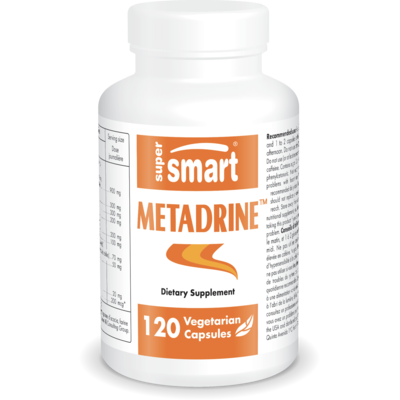
Finally, certain thermogenic foods activate the metabolism and burn fat by raising body temperature (for example coffee, guarana and chilli).
Discover Metadrine™, a super-powerful thermogenic formula rich in chilli pepper to boost weight loss.
SUPERSMART ADVICE
References
- Les régimes hypoglucidiques (« low-carb ») : beaucoup de bruit pour une vieille recette, Bernard Bauduceau, Lyse Bordier, Médecine des Maladies Métaboliques, Volume 14, Issue 2, March 2020, Pages 136-140
- Sünram-Lea SI, Owen L. The impact of diet-based glycaemic response and glucose regulation on cognition: evidence across the lifespan. Proc Nutr Soc. 2017 Nov;76(4):466-477. doi: 10.1017/S0029665117000829. Epub 2017 Jun 27. PMID: 28651658.
- SHERRIER, M. & HONGSHUAI, L. The impact of keto-adaptation on exercise performance and the role of metabolic-regulating cytokines. The American Journal of Clinical Nutrition, 2019, 110, 3, p. 562-573 (doi: 10.1093/ajcn/nqz145).
- St-Onge MP, Bosarge A. Weight-loss diet that includes consumption of medium-chain triacylglycerol oil leads to a greater rate of weight and fat mass loss than does olive oil. Am J Clin Nutr. 2008 Mar;87(3):621-6. doi: 10.1093/ajcn/87.3.621. PMID: 18326600; PMCID: PMC2874190.
- Dong H, Wang N, Zhao L, Lu F. Berberine in the treatment of type 2 diabetes mellitus: a systemic review and meta-analysis. Evid Based Complement Alternat Med. 2012;2012:591654. doi: 10.1155/2012/591654. Epub 2012 Oct 15. PMID: 23118793; PMCID: PMC3478874.
- Talenezhad N, Mohammadi M, Ramezani-Jolfaie N, Mozaffari-Khosravi H, Salehi-Abargouei A. Effects of l-carnitine supplementation on weight loss and body composition: A systematic review and meta-analysis of 37 randomized controlled clinical trials with dose-response analysis. Clin Nutr ESPEN. 2020 Jun;37:9-23. doi: 10.1016/j.clnesp.2020.03.008. Epub 2020 Apr 18. PMID: 32359762.
Keywords




15 Hours
The best supplement for…
The best supplement for hyperpigmentation or melasma. I have struggled with melasma and hyperpigmentation for 10 years. I have tried everything, including lasers. Nothing really worked except this!
NS
2 Days
Great source for high quality…
Great source for high quality supplements
Vikki L
5 Days
Recommended: "Eye Pressure"
(Eye Pressure pills) Highly recommended for glaucoma patients
LM
6 Days
Great follow-up
Great follow-up
Michael Henderson
10 Days
My hair isn't gray.
My hair isn't gray.
TANQUARY Damon
10 Days
The ease of ordering is not the only …
The ease of ordering is not the only reason why I trust Super Smart Supplements. This company researches everything they sell. Educating Me with a wealth knowledge to make Better Supplement choices. The paractin Andrographis is awesome! I noticed less Knee, shoulder or joint pain. Which proves to me, you're never too old to repair what a lifetime of intense usage has done to your body. I recommend SUPER SMART to anyone who is looking to improve their overall health & maintain an active ,pain free life as You age.
Mchael Montalbano
13 Days
Quick shipping and very good quality
Quick shipping and very good quality. I’ve bought from them for the last six months
Monig
16 Days
love the quality of the supplements!
love the quality of the supplements!
Tatiana
18 Days
Came quickly
Came quickly
Courtney Everson
18 Days
Feels great on my skin
I have only used the SuperSmart NAD face cream for a couple of weeks. So I can’t say it transformed my skin yet. However, it absorbs nicely. Is not oily or caused any acne. It feels wonderful in my routine which means I will consistently use every day! I’ve already researched the ingredients so I’m confident it will help clear the zombie cells and keep my skin looking fresh. I’m pleasantly surprised and will repurchase!
Moto
21 Days
Excellent quality
Excellent quality, I can usually tell the difference when I get other cheaper brands that are not as good. Supersmart is my first choice
MMA TUBE
24 Days
Like the product
Like the product. The bottle design is too bland.
JENKINS Rose
30 Days
Super easy and great communication
Super easy and great communication
Greg Maurer
34 Days
Cured my blood sugar issues with correct diet and almost no sugar.
Ordering was very easy and it was here within a day or two. But the best thing of all is that it fixed my blood sugar problems. I was sweating throughout the night. I had almost completely stopped sugar , which definitely helped, but I was still having sweats and this product here solved that problem. It took me years to figure it this out. I hope this helps somebody.
Rickey Matlock
38 Days
I was impressed by the patience of the representative who helped me!
I was having a very hard time trying to set up my account with them and they were very helpful and patient to get it done for me! And I was impressed by all the information they provided about the product I was purchasing!
Rebecca M.