
The five best anti-aromatase substances
When it becomes dominant, aromatase is a significant threat to hormone balance. Here we look at 5 key substances that can reduce its activity.


Aromatase: definition and biological function
What is aromatase?
Aromatase is an enzyme complex responsible for catalysing the conversion of androgen hormones into estrogens. More specifically, it converts hormones into oestrone and hormones into active compounds (1). It is found in various tissues and organs in the body including the gonads (testes and ovaries), the brain, fatty tissue, the placenta, blood vessels, skin and bones.
Does aromatase have any benefits?
Aromatisation is a natural process which is initially beneficial: it finetunes male and female hormone balance.
In particular, it allows menopausal women - once menstruation has ceased - to continue benefiting from a certain level of estrogen (needed for bone health, amongst others) from hormones produced by the adrenal glands. In men too, it provides the small amount of estrogen required for good quality spermatogenesis, amongst others (2-3).
But when aromatase activity goes into overdrive – something which happens much more frequently with age – this balance is disrupted, causing hormone problems with various repercussions.
Benefits of inhibiting aromatase in men
Excessive aromatisation in men precipitates a drop in hormonal levels which already start to fall naturally from the age of 30-40. Depending on the individual, this leads to abdominal fat gain, gynaecomastia (increase in breast tissue), loss of libido, enlarged prostate, mood swings and/or lack of energy (4-5). Partially inhibiting aromatase helps to stabilise levels of androgen hormones and maintain metabolic, emotional and sexual health.
Aromatase and female cancers: what’s the connection?
In women, a number of studies suggest aromatase plays a role in the development of certain hormone-dependent cancers (breast, ovaries …), since estrogens directly stimulate hormone-sensitive tumor cell receptors and contribute to their growth. Anti-aromatase drugs (letrozole, anastrozole, exemestane…) have, for several years, been showing promised in hormone therapy as an adjuvant treatment for breast cancer in post-menopausal women (6).
What can you do to fight aromatase naturally?
Anti-aromatase and diet
Several studies have highlighted the benefits of plant antioxidants in the aromatase inhibition mechanism (7). It would therefore make sense to prioritise a diet high in fruit and vegetables, preferably organic to reduce exposure to xenobiotics (such as synthetic pesticides) which are thought to be endocrine-disruptors.
Studies on women with estrogen-dependent endometrial tumors suggest that overproduction of hormones may stimulate the aromatisation process in situ (8). This makes a case for reducing consumption of refined sugars and foods with a high GI index in order to maintain stable blood sugar levels. It's worth noting that alcohol also stimulates overexpression of aromatase (9).
Lose weight to reduce aromatisation
More generally, any diet and lifestyle measure aimed at reducing fat mass - lowering sugar and saturated fat intake, taking regular exercise, getting sufficient sleep - are also to be encouraged, since adipose cells accumulate a high proportion of aromatase (10).
What about stress?
While the impact of stress on aromatase in humans is not yet clearly established, a study of male quail birds exposed to acute stress found an in increase in cerebral aromatase in the medial preoptic nucleus (the region governing reproductive behavior) (11). Chronic stress is also known to disrupt the hypothalamic-pituitary-gonadal (HPG) axis and the release of hormones (12). All the more reason, then, to embrace relaxation techniques (yoga, meditation, sophrology ...) to manage your emotions as well as possible.
What are the best natural anti-aromatase substances?
Chrysin
Along with apigenin, chrysin has been shown in in vitro studies to be one of the most promising flavonoids for fighting aromatase (13). Isolated from blue passion flower (Passiflora caerulea), chrysin is believed to bind directly to aromatase, blocking its catalytic activity, though the extent of this ability needs to be further investigated in humans (you can find this substance in the supplement Chrysine) (14-15).
Paris (or button) mushrooms
The potential of Paris mushrooms (Agaricus bisporus) to inhibit aromatisation was highlighted in a mouse model analysis. Its fatty acids (more specifically conjugated linoleic acid and its derivatives) appear to be able to bind to active sites of aromatase via a competitive mechanism (16).
Resveratrol
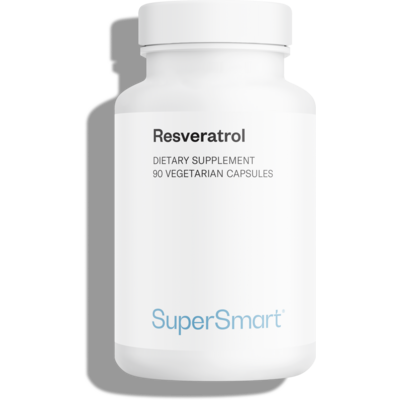
Dubbed the star molecule of longevity (for its leading role in the ‘French Paradox’), the antioxidant resveratrol continues to fascinate scientists. Researchers have for some years been interested in its presumed antiestrogen action. Its effects on aromatase have also been compared with those of selective estrogen receptor modulators, a group of clinically-used anti-aromatase treatments (the supplement Resveratrol is standardized to contain 10% resveratrol, making it the most potent such extract on the market) (17).
Zinc
Zinc is an essential trace element which helps to maintain normal hormonal levels. Animal studies confirm that a zinc-deficient diet is associated with greater conversion of hormones into active compounds, a marker of increased aromatase activity (18). The best dietary sources of zinc include oysters, cheese, red meat, offal and cocoa, but taking a highly-absorbable zinc supplement is also an easy way of optimising intake (one such product is Zinc Orotate).
Turmeric
Ayurveda’s favorite rhizome, turmeric may still have a few secrets to reveal. One study investigating how its curcuminoids affect the aromatisation of hormones (19) found that their molecular conformation had striking similarities with those of steroid substrates, which could make it easier for them to bind to active aromatase sites (combined with phosphatidylcholine, the curcuminoids in Super Curcuma are absorbed 29 times better than those in standard supplements) (20).
Are there specific anti-aromatase supplements?
If you’re keen to restore optimal hormone balance in your body, there are certain supplements that specifically target the problem of aromatase by combining several of the above-mentioned compounds. One example is Natural Anti Aromatase Support, in which the strength of chrysin and Paris mushroom is paired with a whole host of natural and scientifically-studied regulatory compounds: naringin, genistein, quercetin, Epilobium parviflorum, diindolylmethane (21-23)… However, if you have a health condition, make sure you seek medical advice before starting supplementation.
SuperSmart ADVICE
References
- Chan HJ, Petrossian K, Chen S. Structural and functional characterization of aromatase, estrogen receptor, and their genes in endocrine-responsive and -resistant breast ... cells. J Steroid Biochem Mol Biol. 2016 Jul;161:73-83. doi: 10.1016/j.jsbmb.2015.07.018. Epub 2015 Aug 13. PMID: 26277097; PMCID: PMC4752924.
- Martino G, Catalano A, Agostino RM, Bellone F, Morabito N, Lasco CG, Vicario CM, Schwarz P, Feldt-Rasmussen U. Quality of life and psychological functioning in postmenopausal women undergoing aromatase inhibitor treatment for early breast ... PLoS One. 2020 Mar 26;15(3):e0230681. doi: 10.1371/journal.pone.0230681. PMID: 32214378; PMCID: PMC7098625.
- Schulster M, Bernie AM, Ramasamy R. The role of ... in male reproductive function. Asian J Androl. 2016 May-Jun;18(3):435-40. doi: 10.4103/1008-682X.173932. PMID: 26908066; PMCID: PMC4854098.
- de Ronde W, de Jong FH. Aromatase inhibitors in men: effects and therapeutic options. Reprod Biol Endocrinol. 2011 Jun 21;9:93. doi: 10.1186/1477-7827-9-93. PMID: 21693046; PMCID: PMC3143915.
- Ellem SJ, Risbridger GP. Aromatase and prostate ... Minerva Endocrinol. 2006 Mar;31(1):1-12. PMID: 16498360.
- Brueggemeier RW, Hackett JC, Diaz-Cruz ES. Aromatase inhibitors in the treatment of breast ... Endocr Rev. 2005 May;26(3):331-45. doi: 10.1210/er.2004-0015. Epub 2005 Apr 6. PMID: 15814851.
- Balunas MJ, Kinghorn AD. Natural compounds with aromatase inhibitory activity: an update. Planta Med. 2010 Aug;76(11):1087-93. doi: 10.1055/s-0030-1250169. Epub 2010 Jul 15. PMID: 20635310; PMCID: PMC2965731.
- Randolph JF Jr, Kipersztok S, Ayers JW, Ansbacher R, Peegel H, Menon KM. The effect of ... on aromatase activity in isolated human endometrial glands and stroma. Am J Obstet Gynecol. 1987 Dec;157(6):1534-9. doi: 10.1016/s0002-9378(87)80258-2. PMID: 3322018.
- Chung KW. Effects of chronic ethanol intake on aromatization of androgens and concentration of estrogen and androgen receptors in rat liver. 1990 Jun;62(3):285-95. doi: 10.1016/0300-483x(90)90052-i. PMID: 2389244.
- Iyengar NM, Zhou XK, Mendieta H, El-Hely O, Giri DD, Winston L, Falcone DJ, Wang H, Meng L, Ha T, Pollak M, Morrow M, Dannenberg AJ. Effects of obesity on breast aromatase expression and systemic metabo-inflammation in women with BRCA1 or BRCA2 mutations. NPJ Breast .... 2021 Mar 1;7(1):18. doi: 10.1038/s41523-021-00226-8. PMID: 33649363; PMCID: PMC7921427.
- Dickens MJ, Cornil CA, Balthazart J. Acute stress differentially affects aromatase activity in specific brain nuclei of adult male and female quail. 2011 Nov;152(11):4242-51. doi: 10.1210/en.2011-1341. Epub 2011 Aug 30. PMID: 21878510; PMCID: PMC3199009.
- Zueger R, Annen H, Ehlert U. ... and cortisol responses to acute and prolonged stress during officer training school. 2023 Jan;26(1):2199886. doi: 10.1080/10253890.2023.2199886. PMID: 37014073.
- Jeong HJ, Shin YG, Kim IH, Pezzuto JM. Inhibition of aromatase activity by flavonoids. Arch Pharm Res. 1999 Jun;22(3):309-12. doi: 10.1007/BF02976369. PMID: 10403137.
- Jana K, Yin X, Schiffer RB, Chen JJ, Pandey AK, Stocco DM, Grammas P, Wang X. Chrysin, a natural flavonoid enhances steroidogenesis and steroidogenic acute regulatory protein gene expression in mouse Leydig cells. J Endocrinol. 2008 May;197(2):315-23. doi: 10.1677/JOE-07-0282. PMID: 18434361.
- Balam FH, Ahmadi ZS, Ghorbani A. Inhibitory effect of chrysin on estrogen biosynthesis by suppression of enzyme aromatase (CYP19): A systematic review. 2020 Mar 7;6(3):e03557. doi: 10.1016/j.heliyon.2020.e03557. PMID: 32181408; PMCID: PMC7063143.
- Chen S, Oh SR, Phung S, Hur G, Ye JJ, Kwok SL, Shrode GE, Belury M, Adams LS, Williams D. Anti-aromatase activity of phytochemicals in white button mushrooms (Agaricus bisporus). ... Res. 2006 Dec 15;66(24):12026-34. doi: 10.1158/0008-5472.CAN-06-2206. PMID: 17178902.
- Chottanapund S, Van Duursen MB, Navasumrit P, Hunsonti P, Timtavorn S, Ruchirawat M, Van den Berg M. Anti-aromatase effect of resveratrol and melatonin on hormonal positive breast ... cells co-cultured with breast adipose fibroblasts. Toxicol In Vitro. 2014 Oct;28(7):1215-21. doi: 10.1016/j.tiv.2014.05.015. Epub 2014 Jun 12. PMID: 24929094.
- Om AS, Chung KW. Dietary zinc deficiency alters 5 alpha-reduction and aromatization of ... and androgen and estrogen receptors in rat liver. J Nutr. 1996 Apr;126(4):842-8. doi: 10.1093/jn/126.4.842. PMID: 8613886.
- Rodríguez Castaño P, Parween S, Pandey AV. Bioactivity of Curcumin on the Cytochrome P450 Enzymes of the Steroidogenic Pathway. Int J Mol Sci. 2019 Sep 17;20(18):4606. doi: 10.3390/ijms20184606. PMID: 31533365; PMCID: PMC6770025.
- Gupta NK, Dixit VK. Bioavailability enhancement of curcumin by complexation with phosphatidyl choline. J Pharm Sci. 2011 May;100(5):1987-95. doi: 10.1002/jps.22393. Epub 2010 Nov 24. PMID: 21374628.
- El-Kersh DM, Ezzat SM, Salama MM, Mahrous EA, Attia YM, Ahmed MS, Elmazar MM. Anti-estrogenic and anti-aromatase activities of citrus peels major compounds in breast ... Sci Rep. 2021 Mar 29;11(1):7121. doi: 10.1038/s41598-021-86599-z. PMID: 33782546; PMCID: PMC8007834.
- Thomson CA, Ho E, Strom MB. Chemopreventive properties of 3,3'-diindolylmethane in breast ...: evidence from experimental and human studies. Nutr Rev. 2016 Jul;74(7):432-43. doi: 10.1093/nutrit/nuw010. Epub 2016 May 31. PMID: 27261275; PMCID: PMC5059820.
- Ducrey B, Marston A, Göhring S, Hartmann RW, Hostettmann K. Inhibition of 5 alpha-reductase and aromatase by the ellagitannins oenothein A and oenothein B from Epilobium species. Planta Med. 1997 Apr;63(2):111-4. doi: 10.1055/s-2006-957624. PMID: 9140222.
Keywords





1 Days
Product effectiveness
Quick delivery. Giving product 90 days to see if there are any positive changes. Starting days 31-60
Bob L
5 Days
Easy to order products
Easy to order products
Edward P
9 Days
correct product arrived on time
The product arrived on time and appears to be what I ordered (i do not perform any tests outside of my own experience). I have used this Bacillus Subtills for quite over a year, and I am convinced of it's contribution to my microbiome. The product and business model work well.
Lisa
9 Days
All the supplements are of great…
All the supplements are of great quality and they have almost anything you could need
kirstin Torres
9 Days
Easy to order, fast delivery
Easy to order, fast
Sissy Lawson
13 Days
What luck to come across such a clean…
What luck to come across such a clean brand! No bad ingredients in these and a reasonable price for what we're getting.
Bindi S
14 Days
The best supplement for…
The best supplement for hyperpigmentation or melasma. I have struggled with melasma and hyperpigmentation for 10 years. I have tried everything, including lasers. Nothing really worked except this!
NS
16 Days
Great source for high quality…
Great source for high quality supplements
Vikki L
19 Days
Recommended: "Eye Pressure"
(Eye Pressure pills) Highly recommended for glaucoma patients
LM
20 Days
Great follow-up
Great follow-up
Michael Henderson
24 Days
My hair isn't gray.
My hair isn't gray.
TANQUARY Damon
24 Days
The ease of ordering is not the only …
The ease of ordering is not the only reason why I trust Super Smart Supplements. This company researches everything they sell. Educating Me with a wealth knowledge to make Better Supplement choices. The paractin Andrographis is awesome! I noticed less Knee, shoulder or joint pain. Which proves to me, you're never too old to repair what a lifetime of intense usage has done to your body. I recommend SUPER SMART to anyone who is looking to improve their overall health & maintain an active ,pain free life as You age.
Mchael Montalbano
27 Days
Quick shipping and very good quality
Quick shipping and very good quality. I’ve bought from them for the last six months
Monig
30 Days
love the quality of the supplements!
love the quality of the supplements!
Tatiana
32 Days
Came quickly
Came quickly
Courtney Everson